
A Day in the Life of a Private Duty Nurse in NYC
- June 21, 2026
- 10 min read
Private Duty Nurse
Table of Contents
- 1. What Makes Private Duty Nursing in NYC Unique
- 2. Before the Shift Begins
- 3. The Private Duty Nurse Routine: Arrival and Assessment
- 4. Mid-Shift Clinical Responsibilities
- 5. Working With Families and Care Teams
- 6. End of Shift: Documentation and Handoff
- 7. Frequently Asked Questions
- 8. Is Private Duty Nursing in NYC Right for You?
New York City is one of the most demanding and rewarding places in the country to work as a nurse. The boroughs are dense, the patient population is diverse, and the need for skilled home care continues to grow at a pace that few other cities can match. For nurses considering this path, understanding what a private duty nurse routine actually looks like in this city is the first step toward making an informed career decision.
This guide walks through a typical day for a private duty nurse NYC, from the moment they prepare for their shift to the final documentation entry at the end of the day.
1. What Makes Private Duty Nursing in NYC Unique
Private duty nursing anywhere involves focused, one-on-one care delivered inside a patient’s home. In New York City, that work takes on additional dimensions that nurses from other settings or other cities do not always anticipate.
According to the New York State Comptroller, the population age 65 and older in New York City grew by 17 percent between 2019 and 2024, and demand for home care services is rising faster than the system can currently meet. Private duty nurses working in NYC are not just filling shifts. They are serving a community with a genuinely urgent need for skilled clinical care at home.
What makes the NYC context distinct for a private duty nurse routine includes:
- A highly diverse patient population that may include multiple languages spoken in the home
- Patients spread across all five boroughs and Westchester County, each with different neighborhood characteristics
- Complex medical cases that reflect the broad range of conditions common in a large urban population
- A network of physicians, specialists, and care coordinators that nurses communicate with regularly
- Transit and commute considerations that are part of every working day
Nurses looking to understand what types of positions are currently available across New York City can explore the private duty nurse jobs page for a full overview of the role and current opportunities.
2. Before the Shift Begins
A strong private duty nurse routine starts before the nurse ever arrives at the patient’s home. Preparation is one of the most important habits a private duty nurse NYC develops early in their career.
Reviewing the care plan
The night before or the morning of a shift, a private duty nurse reviews the patient’s current care plan. This includes:
- Diagnosis and medical history relevant to that day’s care
- Medication schedule including timing, dosages, and any recent changes
- Specific nursing tasks ordered by the physician for that shift
- Any behavioral, mobility, or safety notes from the previous nurse’s documentation
- Outstanding concerns or changes flagged by the family
Preparing the nursing bag
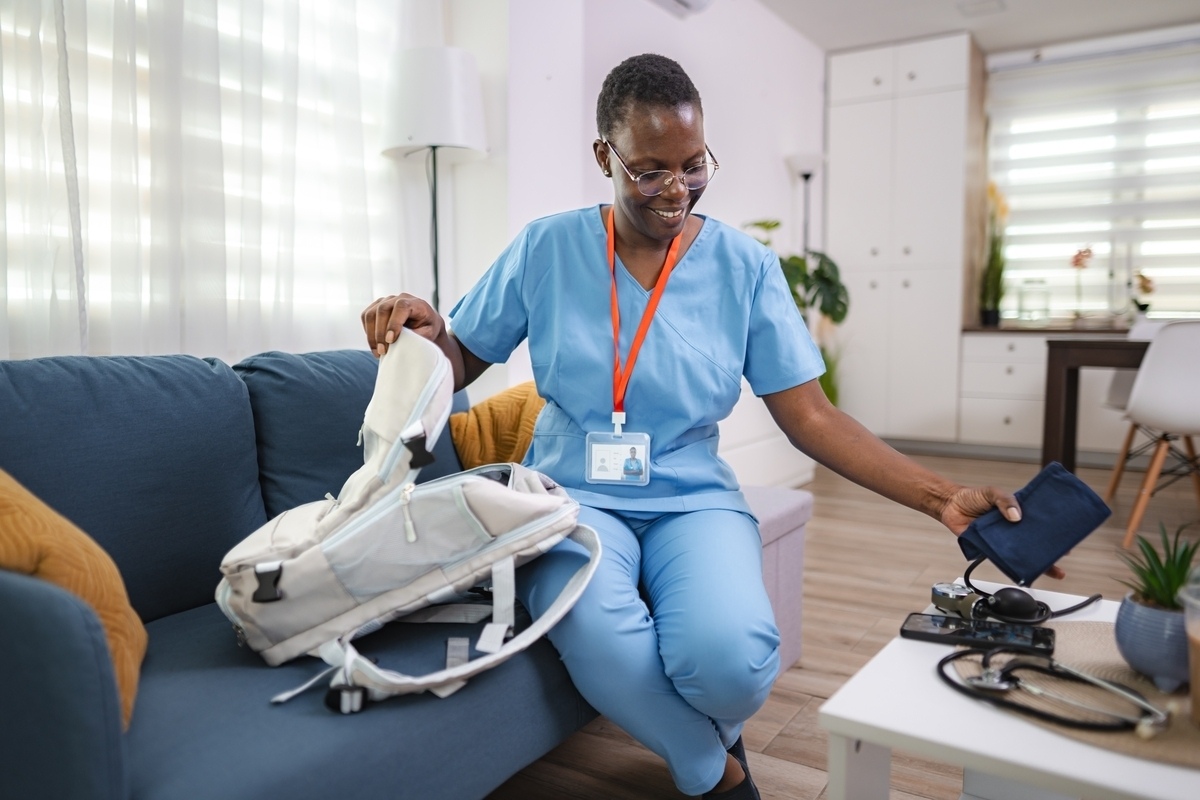
Before leaving for the shift, a private duty nurse confirms their nursing bag contains:
- Gloves and appropriate PPE
- Stethoscope and blood pressure cuff
- Wound care supplies if required by the care plan
- Documentation materials or tablet for electronic charting
- Any equipment specific to the patient’s clinical needs
Commuting in NYC
Getting to a patient’s home in New York City involves navigating subway lines, buses, or driving depending on the borough. Many private duty nurses who work consistently with the same patient build their commute into their daily rhythm over time. For nurses new to a case, confirming the exact address, the best transit route, and which entrance to use before the first visit saves time and reduces the stress of an already full shift day.
3. The Private Duty Nurse Routine: Arrival and Assessment
The opening moments of any private duty shift set the tone for everything that follows. A well-established private duty nurse routine begins the same way every time, regardless of how familiar the nurse is with the patient.
Handoff from the previous nurse or caregiver
Every shift begins with a structured handoff. The outgoing nurse or caregiver communicates:
- The patient’s condition during the previous shift
- Any changes in vital signs, behavior, or physical status
- Medications administered and any reactions observed
- Family concerns or communications that occurred
- Anything that needs immediate follow-up
Initial patient assessment
After the handoff, the nurse completes a thorough patient assessment. This includes:
- Vital signs including blood pressure, heart rate, respiratory rate, and oxygen saturation
- Neurological status and level of alertness
- Skin condition assessment, particularly for patients at risk of pressure injuries
- Pain assessment using the appropriate scale for that patient
- Review of any equipment in use such as oxygen, feeding tubes, or ventilators
All findings are documented and compared to baseline readings. Any significant deviation from the patient’s normal range is communicated to the supervising physician or care team promptly.
According to Nurse.com, private duty nursing encompasses a wide range of medical and personal care tasks including administering medications, performing wound care, catheterization, tracheostomy care, and ongoing vital signs monitoring. The assessment at the start of every shift is what makes all of those tasks safe and informed.
4. Mid-Shift Clinical Responsibilities
Once the opening assessment is complete, the private duty nurse moves into the clinical work of the shift. What this looks like depends on the patient’s diagnosis, the care plan, and the nurse’s scope of practice.
Medication administration
Medications are administered exactly as prescribed, documented immediately after administration, and monitored for effects or adverse reactions. For patients on complex medication regimens, this requires careful attention to timing and sequencing throughout the shift.
Wound care and dressing changes
Patients requiring wound care receive dressing changes at the frequency specified in the care plan. The nurse assesses the wound at each change, documents the appearance and any changes in healing progress, and reports concerns to the care team.
Advanced clinical procedures
Depending on the patient’s needs, mid-shift clinical work may also include:
- Tracheostomy care and suctioning
- Ventilator management and circuit checks
- Feeding tube administration and site care
- IV therapy management
- Catheter care and monitoring
- Respiratory treatments and nebulizer administration
Patient and family education
Education is a consistent part of every private duty nurse routine. Nurses explain medications and their purposes, demonstrate safe mobility and transfer techniques to family caregivers, and provide guidance on recognizing warning signs that require medical attention. This education is documented as part of the visit record.
For a detailed breakdown of every clinical task that makes up a private duty shift, reviewing what private duty nurses do on a shift is a useful reference before starting a new case.
5. Working With Families and Care Teams
One of the defining features of private duty nursing in NYC is the consistent presence of family members during shifts. In a hospital, family contact is structured and time-limited. In a patient’s home, family members are part of the environment.
Communicating with family members
Effective communication with families is a core skill for any private duty nurse NYC. Family members often have important information about the patient’s condition, preferences, and history. They also have questions, concerns, and occasionally strong opinions about care decisions.
The nurse’s role is to:
- Keep family members informed about the patient’s status in clear, accessible language
- Listen to family concerns and document them appropriately
- Maintain professional boundaries while working collaboratively within the home
- Involve family caregivers in care tasks where appropriate and safe
Communicating with the care team
Throughout the shift, a private duty nurse maintains communication with the broader care team. This includes:
- Reporting significant changes in patient condition to the supervising physician
- Coordinating with physical or occupational therapists who may visit during the shift
- Updating the care coordinator on any changes that affect the care plan
- Collaborating with LPNs or home health aides assigned to the same patient
Clear, timely communication across all of these channels is what keeps a complex home care case running safely and effectively.
6. End of Shift: Documentation and Handoff
The final portion of a private duty nurse routine is documentation and handoff. These steps are as clinically important as anything that happens during the shift itself.
Documentation
Home care documentation is detailed and must be completed accurately before the nurse leaves or as close to the end of the shift as possible. A complete shift record includes:
- All vital signs taken during the shift with timestamps
- Every medication administered including dose, route, and time
- Wound care performed and assessment findings
- Any changes in patient condition and actions taken
- Family communications that occurred during the shift
- Education provided to the patient or family
- Equipment checks and any concerns noted
Outgoing handoff
The outgoing handoff to the next nurse or caregiver follows the same structured format as the incoming handoff. Clarity and thoroughness at this stage directly affects the quality and safety of the care that follows.
According to the U.S. Bureau of Labor Statistics, employment of registered nurses is projected to grow 5 percent through 2034, with home health and community care settings representing a significant portion of that growth. For nurses building a private duty nurse routine in NYC, that growth means consistent demand and long-term career stability in one of the country’s most active home care markets.
For nurses based in or near the Bronx, the private duty nurse jobs in the Bronx page outlines the specific neighborhoods and case types currently available in that borough.
7. Frequently Asked Questions
What does a typical private duty nurse routine look like in NYC?
A typical day includes reviewing the care plan before the shift, commuting to the patient’s home, completing a structured handoff and initial assessment, performing clinical tasks according to the care plan, communicating with the patient’s family and care team, and completing thorough documentation before the shift ends.
How long are private duty nursing shifts in NYC?
Shift lengths vary depending on the patient’s needs and the agency’s scheduling. Common shift lengths include 8-hour, 10-hour, and 12-hour blocks. Overnight shifts are also available for patients who require continuous care through the night.
Do private duty nurses in NYC work with the same patient every shift?
In most cases, yes. Private duty nursing is designed around consistent one-on-one assignments. Working with the same patient over an extended period allows the nurse to build clinical familiarity and a genuine therapeutic relationship.
What clinical conditions do private duty nurses commonly manage in NYC?
Private duty nurses in NYC work with a wide range of patients including medically complex pediatric patients, elderly adults managing multiple chronic conditions, post-surgical patients recovering at home, and patients requiring ventilator or tracheostomy care.
How does commuting affect the private duty nurse routine in NYC?
Commuting is a practical part of daily life for any nurse working in New York City. Most experienced private duty nurses build their commute into their preparation routine, confirming routes and transit options before each shift, particularly when starting a new case in an unfamiliar borough or neighborhood.
Is documentation different in home care compared to a hospital?
Yes. Home care documentation is more detailed in some respects because the nurse is the only clinical professional present during the shift. Every observation, intervention, and communication must be recorded thoroughly to support continuity of care across shifts.
8. Is Private Duty Nursing in NYC Right for You?
The private duty nurse routine in New York City is demanding, deeply clinical, and genuinely rewarding in ways that are difficult to replicate in any other nursing setting. You work with one patient at a time, build real relationships over the course of an assignment, and apply your full clinical skill set in an environment that requires independence, adaptability, and precision.
The city itself adds a layer of complexity and richness to the work. The patients nurses serve in Brooklyn, Queens, the Bronx, Manhattan, Staten Island, and Westchester County represent some of the most diverse and medically underserved communities in the country. Showing up for those patients, shift after shift, is work that matters in a tangible and immediate way.
For nurses who value clinical depth, schedule flexibility, and meaningful patient connection, private duty nursing in NYC offers a career path worth taking seriously.
Key Takeaways
- The private duty nurse routine in NYC begins before the shift with care plan review and nursing bag preparation
- Every shift opens with a structured handoff and thorough patient assessment before any clinical tasks begin
- Mid-shift responsibilities include medication administration, wound care, advanced procedures, and patient and family education
- Family communication and care team coordination are consistent parts of every private duty shift in a home setting
- End of shift documentation must be thorough and accurate since the nurse is the only clinical professional present
- NYC’s growing older adult population means private duty nurses are working in one of the highest-demand home care markets in the country
- Nurses who value clinical independence, consistent patient relationships, and adaptability tend to build strong and lasting careers in private duty nursing
WANT TO LEARN MORE ABOUT PRIVATE DUTY NURSING IN NYC?
Understanding the private duty nurse routine is the first step. The next is exploring what a career in this field looks like in practice, from the clinical responsibilities to the neighborhoods served across New York City’s five boroughs and Westchester County.
Disclaimer: This article is for general informational purposes only and does not constitute professional medical or career advice. Nursing scope of practice, agency protocols, and daily responsibilities vary by employer, patient population, and region. Always follow the guidelines of your licensing board and employing agency.
References
- New York State Comptroller. DiNapoli: NYC Department for the Aging Faces Challenges Meeting Growing Home Care Needs. https://www.osc.ny.gov/press/releases/2026/03/dinapoli-nyc-department-aging-faces-challenges-meeting-growing-home-care-needs
- Nurse.com. What is Private Duty Nursing? https://www.nurse.com/nursing-resources/definitions/what-is-private-duty-nursing/
- U.S. Bureau of Labor Statistics. Registered Nurses: Occupational Outlook Handbook. https://www.bls.gov/ooh/healthcare/registered-nurses.htm